
Task Job Scam: How It Works, Warning Signs and What to Do If You Paid
By the DoForMoney team
Updated: 5 min read
Task job scams start with small, easy tasks and real payments, then ask you to pay more. Learn how they work, how to spot one and what to do quickly if you've already sent money.
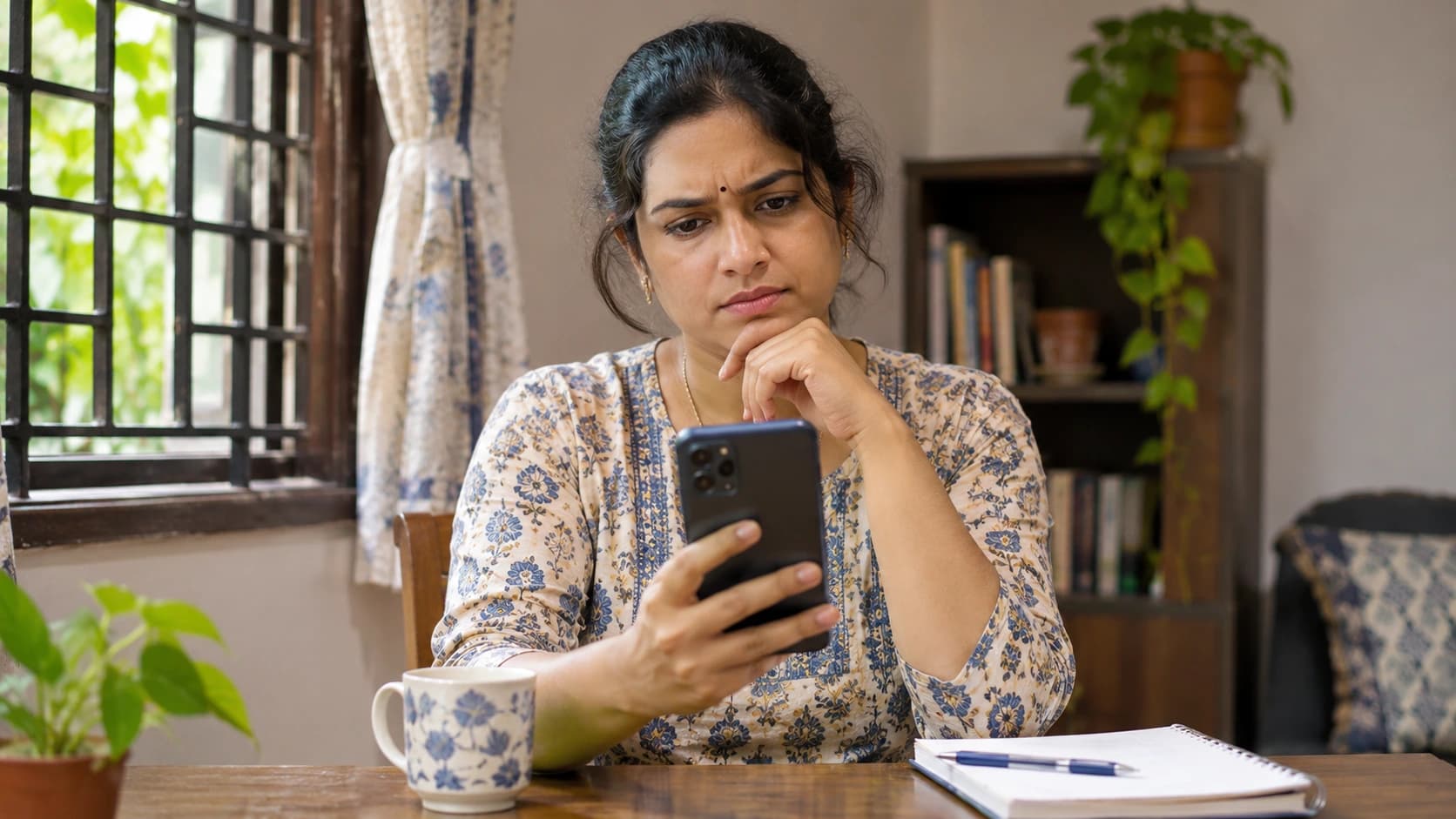
A stranger messages you on WhatsApp or Telegram with an "easy part time job". You write one Google review, and real money reaches your account. It feels genuine, and that is exactly how a task job scam is designed to feel.
This guide explains how the scam works, how to identify a fake job offer and what to do if you've already paid.
If you've already sent money, call 1930 now or report it at cybercrime.gov.in. Don't pay anything more.
What is a task job scam?
A task job scam, also called a task based job scam or part time job scam, is a fake job that pays you small amounts for simple online tasks. Those tasks can include writing Google reviews. Once you trust it, you're asked to deposit your own money to earn more, and that money doesn't come back.
The Indian government has blocked 100 websites linked to task-based job fraud and investment schemes.
How a task job scam works
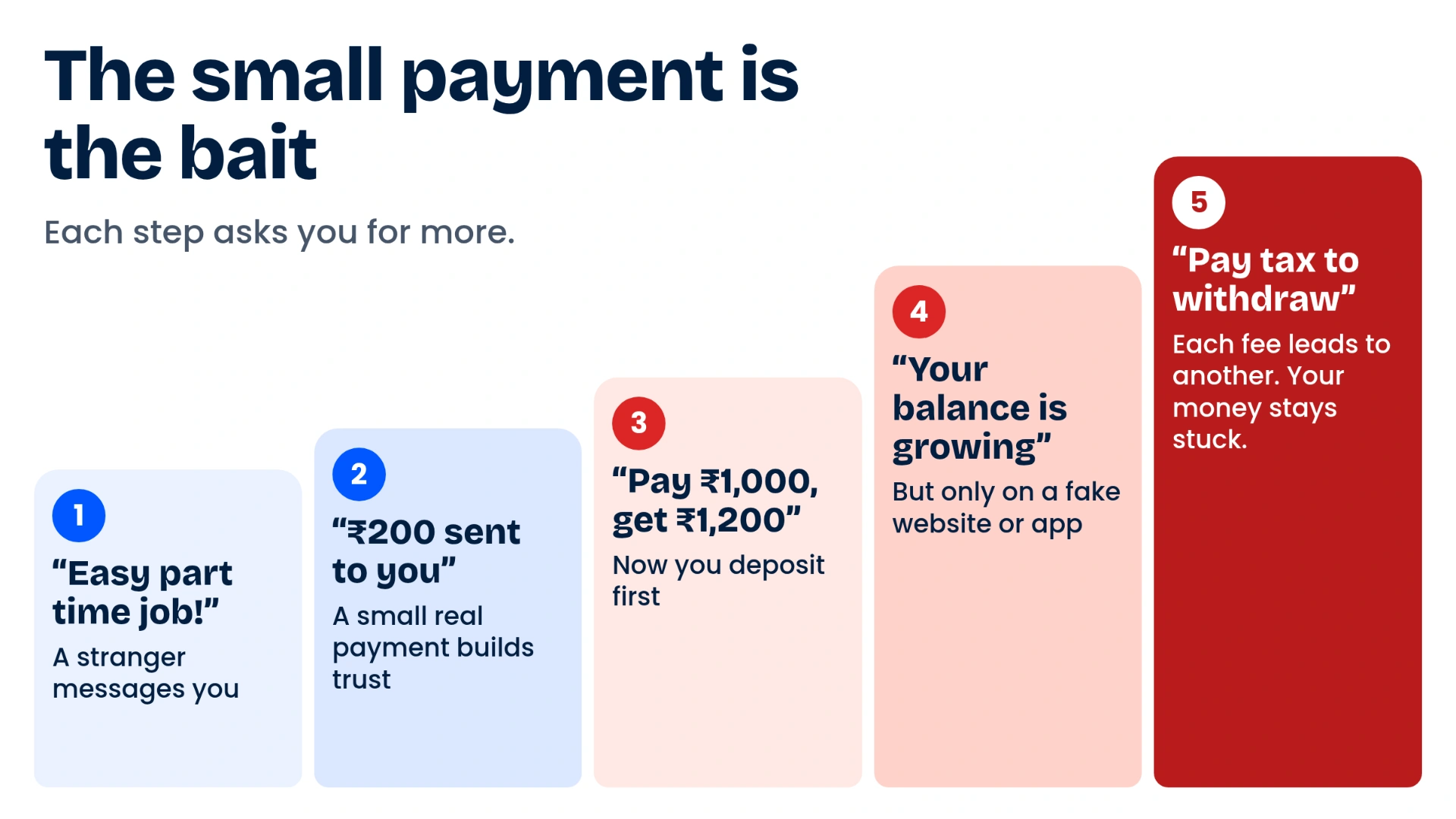
A friendly message. Someone offers an easy part time job on WhatsApp or Telegram.
A small real payment. You complete a simple task and receive a small amount, often around ₹100–200. This is what builds your trust.
Pay-first tasks. You're moved to a group and asked to deposit money for a bigger return, such as paying ₹1,000 to get ₹1,200 back.
Fake earnings. A website or app shows your balance growing, but that money isn't in your bank account.
Money stuck. When you try to withdraw, you're told to pay "tax", "verification" or "processing" fees. Each payment leads to another demand.
Two real cases
Mumbai: ₹43.51 lakh in about six days
A Mumbai doctor received a WhatsApp offer of a part time job and got ₹200 after one Google review task. She was then added to Telegram groups. When she couldn't withdraw her earnings, channels posing as a "Finance Department" and a "Tax Department" demanded fees. She lost ₹43,51,550.
Pune: ₹2.72 crore in about two months
A Pune tax consultant joined a Telegram group through a work-from-home offer and was shown earnings of about ₹100 per task. He then moved on to prepaid tasks. Over 33 transactions, he lost ₹2.72 crore.
Both victims were educated professionals. Anyone can be caught by this scam, so there's no shame in reporting it.
How to identify a fake job offer
Walk away if you see any of these signs:
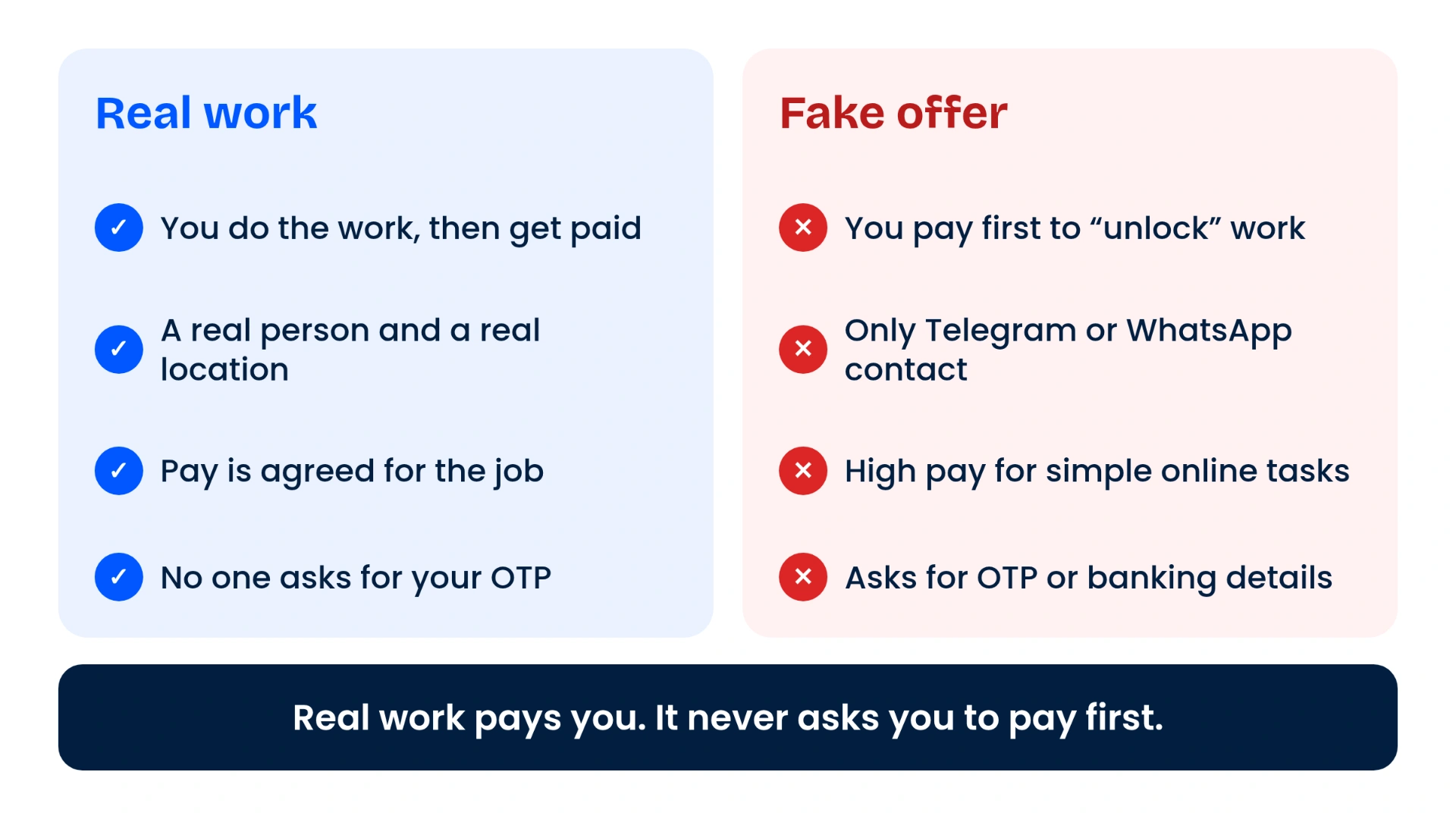
You must pay a fee, deposit or "investment" to get work or earn more
The job came from a stranger on WhatsApp, Telegram or Instagram
The pay is high for simple work like liking videos or writing reviews
You're added to a group where others post screenshots of their earnings
Your earnings appear only on a website or app, not in your bank account
You must pay tax or a fee before you can withdraw
Payments go to different personal bank accounts or UPI IDs
Someone asks for your OTP, UPI PIN or banking password
You're told to hurry before the offer ends
The simple rule: real work pays you. It never asks you to pay first.
What to do if you've already paid
Stop paying. Don't send a final "release fee", even if they promise it's the last one.
Report it immediately. Call 1930, the national cyber fraud helpline, or file a complaint at cybercrime.gov.in.
Tell your bank. Share the transaction details and ask what it can do.
Save your proof. Keep screenshots, chats, links, usernames, UPI IDs, bank account numbers and transaction IDs. Don't delete the chats.
Beware of recovery offers. Anyone who promises to get your money back for a fee may be another scammer.
Getting your money back isn't guaranteed, but it's still worth reporting as soon as you can.
If you got the message but didn't pay
Don't click any links, and block the sender. If you can see their phone number, you can report the message on Chakshu on Sanchar Saathi. Chakshu is for suspected fraud messages and calls. If you've lost money, use 1930 or cybercrime.gov.in instead.
Is DoForMoney a task scam?
You should ask this about any site with "money" in its name, so here are the facts you can check yourself.
Signing up, browsing and making offers are free.
Tasks are real-world work in a named city, like the ones you can browse here, not likes or reviews.
The tasker pays the worker directly. DoForMoney doesn't take, hold or guarantee payments.
People have public profiles and reviews, and you can chat before agreeing to anything.
We also don't run ID or background checks, so stay careful here too. A tasker should never ask you to pay to get a task. If one does, don't pay, and contact us with the task link. Read our safety tips for more.
Frequently asked questions
Are Telegram part time jobs real or fake?
Be very careful with them. If a stranger on Telegram offers paid tasks or asks you to deposit money, treat it as a scam.
They paid me first. Doesn't that mean it's real?
No. A small first payment is how these scams build trust. In both cases above, victims received a small amount before they lost much more.
Is it a scam if I only have to like videos or write reviews?
Treat it as one. Simple online tasks with high pay are a common starting point, especially when you're moved to a group afterwards.
How do I report an online job scam in India?
Call 1930 or file a complaint at cybercrime.gov.in. Keep your screenshots and transaction details ready.
Can I get my money back from a task scam?
There's no guarantee. Report it as soon as you can, tell your bank and don't pay anyone who promises to recover it for a fee.
Looking for real work instead?
Real local work is out there, and it won't ask you to pay first. See real weekend part time work and what it pays.